Best Security Camera Mounts and Junction Boxes
The VALUCAM PFA130-E is the pick for most PoE cameras at $17.99: its IP66 rated aluminum housing fits the standard mounting pattern most Dahua and Amcrest camera bodies already use.
Every PoE camera ships with a cable tail and an RJ45 connector that has to land somewhere, and most camera bodies come with only a flat wall plate for aiming straight ahead. A junction box keeps that connector dry, and a corner or pole mount is what lets the same camera aim along a wall instead of straight out from it.
None of these parts are optional once a camera goes outdoors for real. A connector left exposed to weather is one of the most common points of failure in an otherwise reliable PoE camera system, and it is also the cheapest part of the whole install to get right.
| Product | Type | Material | Rating |
|---|---|---|---|
| NVRTTRR Junction Box | Junction box | Plastic | Rainproof, not independently rated |
| VALUCAM PFA130-E | Junction box | Aluminum | IP66 |
| Saindo 4-Pack | Junction box | ABS plastic | Not independently rated |
| compcctv L-Bracket | Wall bracket | Aluminum | Not independently rated |
| WiTi Pole Mount | Pole and corner mount | Metal | Not independently rated |
| WiTi Stainless Mount | Pole and corner mount | Stainless steel | Corrosion resistant |
| ZT-NET Corner Mount | Corner mount | 304 stainless steel | Corrosion resistant |
| Hrensaw Electrical Box | Weatherproof enclosure | Reinforced PP | IP54 |
Why does the connector need its own enclosure?
Most outdoor camera bodies are rated for weather at the lens and the housing, but the RJ45 connector and any cable splice behind the camera usually is not. Water that tracks down the cable and into an open connector corrodes the contacts slowly, which shows up months later as an intermittent dropout that is hard to trace back to its actual cause.
A junction box mounted directly behind the camera gives that connector, and any excess cable, a sealed space to sit in rather than hanging exposed against the wall. The IP66 rated VALUCAM box and the four pack of Saindo boxes both solve this for a fraction of what a service call to find the same fault later would cost.
When does a camera need a pole or corner mount instead of the stock bracket?
A camera's stock wall plate aims it straight out from whatever surface it is bolted to. Mounting the same camera on a corner or pole bracket instead lets it aim diagonally along two walls or down a fence line, which on a typical rectangular property roughly doubles the useful ground one camera actually covers.
The WiTi pole mounts and the ZT-NET corner bracket both solve this for camera bodies that would otherwise only ever see whatever is directly in front of the wall they are bolted to.
Beginner pick
The Saindo four pack of ABS junction boxes is the cheapest way to protect the connector behind every camera on a first install, four boxes for less than the price of one branded unit.
Intermediate pick
The VALUCAM PFA130-E adds a genuine IP66 rating and an aluminum body built to the mounting pattern most PoE camera brands already use, for a system meant to last through real weather rather than just look protected.
Expert pick
The WiTi stainless steel pole mount is built for coastal or heavily salted locations where a painted or plain metal bracket would corrode within a couple of seasons, at a small premium over the standard version.
How we chose these mounts and enclosures
These picks rest on published IP and material ratings alongside verified owner reviews, not on our own weather testing of each enclosure over a season outdoors. We have not run these boxes through our own exposure trial and never claim a durability result we did not read directly from the manufacturer or from an owner who actually installed one.
Where a listing did not publish an ingress rating at all, we noted that plainly rather than assume a plastic box was equivalent to a rated one.
The mounts and enclosures we compared

Universal Bullet Security Camera Junction Box Mount Bracket, Rainproof
$15.99The connector is the part that fails outdoors, and a junction box is the cheapest way to keep it dry and out of sunlight.
Check price on AmazonPrices change often.

VALUCAM PFA130-E Security Camera Wall and Ceiling Mounting Junction Box, IP66
$17.99An IP66 rating is a published ingress standard rather than a marketing word, and this is the pattern most Dahua and Amcrest bodies are designed to sit on.
Check price on AmazonPrices change often.
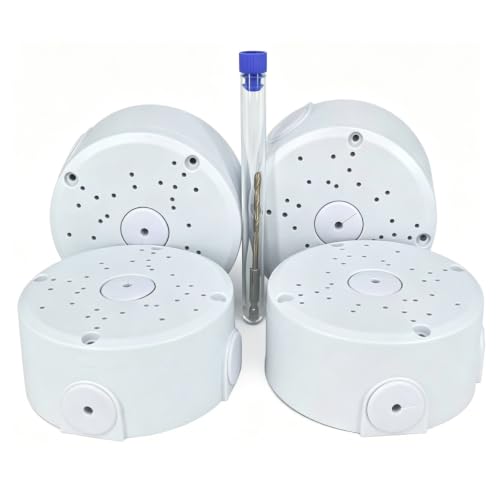
ABS Universal Junction Box for IP Camera Mount Bracket, 4 Pack
$9.99Four boxes for the price of one branded unit, which is the sensible buy when every camera on the house needs one.
Check price on AmazonPrices change often.

compcctv Security Camera Mount Bracket, Aluminum Indoor Outdoor Wall Mount L-Type
$19.99Aluminium rather than plastic, for a camera that has to stay aimed through a winter of wind loading.
Check price on AmazonPrices change often.

WiTi Universal Vertical Pole Mount for Security Camera, Metal Corner Bracket
$9.98Aiming a camera along a wall instead of perpendicular to it roughly doubles the useful coverage of a rectangular property.
Check price on AmazonPrices change often.
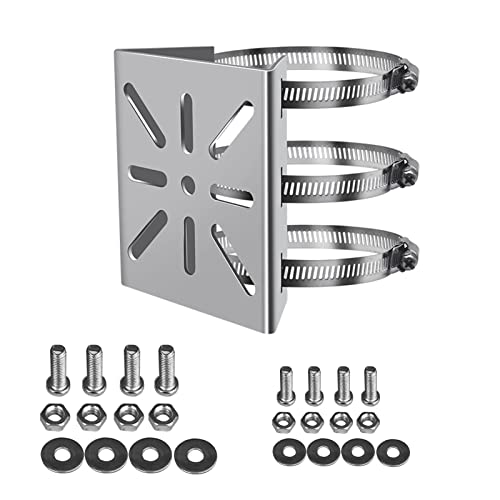
WiTi Universal Vertical Pole Mount for Security Camera, Stainless Steel
$12.99Stainless rather than painted steel, which is what a coastal or heavily salted location needs.
Check price on AmazonPrices change often.

ZT-NET Security Camera Corner Pole Mounting Bracket, Stainless Steel
$14.49A corner bracket that suits the smaller dome and turret bodies the larger mounts do not fit.
Check price on AmazonPrices change often.

Hrensaw Large Outdoor Electrical Box, Weatherproof, IP54
$24.99Somewhere dry for a PoE injector or an extender that has to live outdoors partway along a long run.
Check price on AmazonPrices change often.
Common questions
Do I really need a junction box behind an outdoor camera?
Yes, if the camera's own housing does not enclose its connector, which is true of most PoE bullet and dome cameras. The lens and body are usually weather rated, but the RJ45 connector behind the camera typically is not. A junction box seals that connection and any excess cable, preventing the slow corrosion that causes intermittent dropouts months after install.
What does an IP66 rating actually mean?
IP66 is a published ingress protection standard, not a marketing phrase. The first digit, 6, means the enclosure is fully dust tight. The second digit, also 6, means it withstands powerful water jets from any direction. A box rated IP66, like the VALUCAM PFA130-E, has been tested against both, unlike an unrated plastic box making similar claims informally.
When does a camera need a pole mount instead of the included wall bracket?
When the camera needs to aim along a wall or fence line rather than straight out from whatever surface it is bolted to. A stock wall bracket only aims perpendicular to the mounting surface. A corner or pole mount angles the same camera diagonally, which on a typical rectangular property roughly doubles the ground one camera can usefully cover.
Should camera mounting hardware be aluminum, steel, or stainless steel?
Aluminum resists rust and is lighter, which suits most inland installs. Plain steel is strong but will eventually corrode if the coating is scratched. Stainless steel costs more but holds up in coastal areas or anywhere road salt is common, which is why it is worth the premium specifically in those conditions rather than as a universal default choice.
Where should a weatherproof electrical box be used in a camera install?
A weatherproof electrical box like the Hrensaw or Flemoon units here is for housing a PoE injector, extender, or splice partway along a long outdoor cable run, not for the camera itself. Keeping that hardware dry and out of direct sun in a rated box prevents the same slow failure that an exposed connector causes at the camera end.
Get the system planning sheet
The camera count, storage and PoE budget worksheet, plus the wiring checklist, as one printable page.
Keep going
Before you point a camera at anything. Aim cameras at your own property and your own boundary, never into a neighbour's windows or across their garden. Cameras in bedrooms, bathrooms, or anywhere else a person reasonably expects privacy are a serious legal problem, and that includes guests, lodgers and anyone who works in your home. Audio is legally different from video, many US states require the consent of every party to a recorded conversation, and several recorders capture audio by default, so check your own state before you enable it. Some places require visible notice that recording is taking place, and landlords and homeowner associations often impose their own rules on top. This is researched general information and not legal advice, and the law varies by state and by country.
And once it is installed. Change every default password, keep the firmware updated, and be clear with yourself about where the footage goes: a cloud camera means a third party holds recordings of your home, while a local recorder keeps them in your house. That is a genuine buying consideration, not a technicality.