Best PTZ and Optical Zoom Security Cameras
The REOLINK RLC-823S1 is the pick for long driveways: its 5x optical zoom on a 360 degree pan and tilt head multiplies pixel density on a distant subject by roughly five, something no amount of digital zoom on a fixed lens can do.
Every camera in this catalog can crop into its own image and call it zoom, but cropping does not add pixels, it only enlarges the ones already captured. A subject far from the lens stays exactly as blurry after a digital zoom as before it. Optical zoom is the only way to genuinely resolve more detail at range, because it changes the focal length of the lens itself before the image is ever captured.
This page covers the four PTZ and optical zoom cameras in the catalog, plus one high resolution fixed camera included for contrast, to make the difference between more megapixels and more optical reach concrete rather than abstract.
| Model | Resolution | Optical zoom | Moving parts | Best for |
|---|---|---|---|---|
| REOLINK RLC-823S1 | 4K (8MP) | 5x | Pan, tilt and zoom motor | Long driveways needing coverage and reach |
| REOLINK RLC-811A | 4K (8MP) | 5x | None, fixed body | Zoom reach with nothing to seize |
| REOLINK TrackMix PoE | 4K (8MP) telephoto lens | 6x hybrid, dual lens | Pan and tilt motor | Wide context and a close view at once |
| REOLINK E1 Outdoor SE PoE | 4K (8MP) | None | Pan and tilt motor | Covering two directions from one mount |
| REOLINK RLC-1212A | 12MP | None, fixed body | None, fixed body | More total pixels across a wide scene |
| Amcrest 4K AI Bullet | 4K (8MP) | None, digital only | None, fixed body | Illustrating the digital zoom limit |
Why doesn't digital zoom help identify someone far away?
Digital zoom works by cropping a section of the sensor's existing image and stretching it to fill the frame, the same operation as zooming into a photo on a phone. No new information enters the frame during that crop, so the pixel count landing on the subject never increases. A subject captured at a certain pixel height stays exactly that height after a 4x digital zoom, just spread across a larger, blurrier area.
Optical zoom instead moves the lens elements to change the focal length before the sensor ever captures the frame, which genuinely increases how many of the sensor's real pixels land on a distant subject. The Amcrest 4K AI bullet camera in the comparison table below publishes its own DORI identify distance at about 28 feet despite an 8 megapixel sensor, precisely because its lens is fixed rather than zooming.
PTZ versus a fixed zoom lens: what is the tradeoff?
A true pan-tilt-zoom head, like the one on the RLC-823S1, can cover 360 degrees and reposition itself automatically to track a moving subject, at the cost of a motor and gears that are the one mechanical part on the camera that can eventually wear out or seize. The RLC-811A carries the same 5x optical zoom in a fixed bullet body with no moving parts at all, trading the ability to reposition for one less thing to fail.
The REOLINK TrackMix splits the difference with two lenses on one pan and tilt head: a wide lens for constant context and a telephoto lens that zooms in automatically on whatever the wide lens is tracking, which answers the usual argument between covering a whole yard and identifying a face in it.
Beginner pick
The REOLINK E1 Outdoor SE PoE keeps things simple with pan and tilt coverage across two directions from one mount and no zoom lens to learn, enough for a first camera pointed down a single side yard or gate.
Intermediate pick
The REOLINK RLC-811A carries the same 5x optical zoom as the PTZ model in a fixed body with no motor to fail, a good match for a driveway that only needs to be watched from one angle.
Expert pick
The REOLINK RLC-823S1 pairs 5x optical zoom with full 360 degree pan and 90 degree tilt and auto tracking, built for a long driveway or a large yard where one camera has to both cover the whole space and identify anyone in it.
How we chose these PTZ and zoom cameras
These comparisons rest on published zoom ratios, resolution, and DORI figures where the manufacturer provided them, along with verified owner reviews, not on a side by side field test we ran ourselves. We have not mounted and compared these cameras in person and never state a zoom range or identify distance that a listing did not publish first.
We ranked optical zoom above digital zoom throughout this page on the physics of the two technologies, not on marketing language. A camera advertising a large combined zoom number without specifying how much of it is optical is a camera whose long range claims deserve real skepticism.
The PTZ and zoom cameras we compared

REOLINK RLC-823S1 4K PoE PTZ Camera, 5X Optical Zoom
$246.49Five times optical zoom multiplies pixels per metre at the far end of a drive by five, which no amount of sensor resolution on a fixed wide lens will do.
- Resolution
- 8 MP
- Optical zoom
- 5 x
Prices change often.
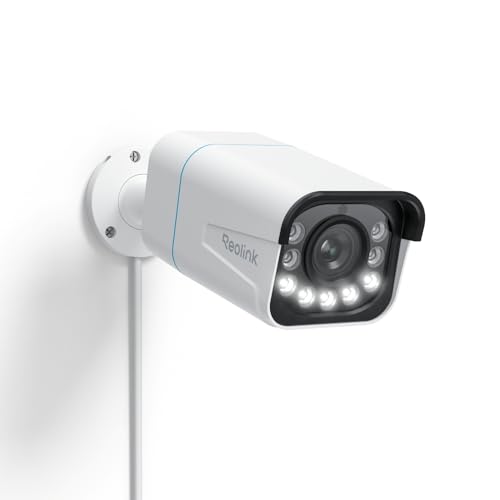
REOLINK RLC-811A PoE Security Camera, 5X Optical Zoom, 4K
$139.99The same five times optical zoom in a fixed bullet body rather than a motorised head, which is cheaper and has nothing in it that can seize.
- Resolution
- 8 MP
- Optical zoom
- 5 x
Prices change often.

REOLINK TrackMix PoE Dual-Lens PTZ Security Camera, 6X Hybrid Zoom
$199.99Two lenses at once, one wide for context and one telephoto for detail, which resolves the usual argument between covering the whole drive and identifying anyone on it.
- Resolution
- 8 MP
Prices change often.

REOLINK E1 Outdoor SE PoE 4K Camera with Pan and Tilt
$119.99Pan and tilt on a small PoE body, useful where one camera has to cover two directions that are not adjacent.
- Resolution
- 8 MP
Prices change often.

REOLINK RLC-1212A 12MP Bullet Outdoor PoE Camera
$129.99Twelve megapixels on a single camera, which buys real DORI identify distance on the one approach where you actually need a face rather than a shape.
- Resolution
- 12 MP
Prices change often.

Amcrest UltraHD 4K 8MP IP PoE AI Camera, 129 degree FOV, 49ft Color Nightvision
$109.99A 129 degree field of view covers a whole driveway from one mount, at the cost of pixel density: the wider the lens, the shorter the distance at which it can still identify anyone.
- Resolution
- 8 MP
- Field of view
- 129 degrees
- Stated IR range
- 49 ft
Prices change often.
Common questions
What is the difference between optical zoom and digital zoom?
Optical zoom physically changes the lens's focal length before the sensor captures the image, which increases the number of real pixels landing on a distant subject. Digital zoom crops and enlarges an already captured image, adding no new pixel information at all. A camera advertising a large zoom number without saying how much is optical is likely relying mostly on the digital kind.
Can a high megapixel camera substitute for optical zoom?
Partly. The REOLINK RLC-1212A's 12 megapixel sensor packs more pixels across the whole scene than a 4K camera's 8 megapixels, which helps identify closer subjects and supports more digital cropping room. It still cannot match what 5x optical zoom does at real distance, since more total pixels spread across a wide scene is not the same as more pixels concentrated on one subject.
Do PTZ cameras need more maintenance than fixed cameras?
The moving pan-tilt-zoom mechanism is the one part on these cameras with gears and a motor, which is mechanically more likely to eventually wear than a fixed lens with no moving parts. A fixed zoom camera like the REOLINK RLC-811A carries the same optical zoom without that mechanism, trading the ability to reposition for one less part that can fail over years outdoors.
What does auto tracking actually do on a PTZ camera?
Auto tracking uses the camera's own motion detection to swing the pan and tilt head toward a moving person or vehicle and keep it centered in frame as it moves. On the REOLINK TrackMix, the wide lens tracks the subject while a separate telephoto lens zooms in for detail, so the camera keeps both a wide view and a close view running at once.
Is a dual lens camera better than a single PTZ camera?
It depends on the priority. A dual lens camera like the TrackMix keeps a permanent wide view running alongside its zoomed detail view, so nothing outside the zoomed frame goes unrecorded. A single PTZ lens like the RLC-823S1 covers more total ground with its 360 degree pan but only records the zoomed view while the wide angle is not in use.
Get the system planning sheet
The camera count, storage and PoE budget worksheet, plus the wiring checklist, as one printable page.
Keep going
Before you point a camera at anything. Aim cameras at your own property and your own boundary, never into a neighbour's windows or across their garden. Cameras in bedrooms, bathrooms, or anywhere else a person reasonably expects privacy are a serious legal problem, and that includes guests, lodgers and anyone who works in your home. Audio is legally different from video, many US states require the consent of every party to a recorded conversation, and several recorders capture audio by default, so check your own state before you enable it. Some places require visible notice that recording is taking place, and landlords and homeowner associations often impose their own rules on top. This is researched general information and not legal advice, and the law varies by state and by country.
And once it is installed. Change every default password, keep the firmware updated, and be clear with yourself about where the footage goes: a cloud camera means a third party holds recordings of your home, while a local recorder keeps them in your house. That is a genuine buying consideration, not a technicality.