Camera Mounting Height and Angle
Mounting a camera roughly 2.5 to 3 metres up, just out of easy reach, generally gives a far better angle on a face than the 3.5 metre-plus eaves height many installers default to, since a steep look-down angle from higher up tends to record the top of someone's head rather than their face. The 2.5 to 3 m figure is a convention, not a standard, and a reader with a real vandalism concern can reasonably go higher.
Two cameras with identical resolution and lens can produce very different results depending on nothing but where they are mounted and how they are angled. A camera under the eaves at 3.5 metres or more, angled steeply down to cover the porch below, records the tops of heads and identifies nobody; the same camera at roughly 2.5 to 3 metres, angled more gently, gets a usable look at a face.
The trade-off is real: a lower camera is easier to reach and tamper with. This guide covers the convention, the geometry behind it, and how to work out what a specific mounting height and angle actually delivers.
None of the geometry here changes with camera brand or price. A budget camera mounted well at a sensible height and angle will out-perform an expensive one mounted too high with too steep a tilt, because the underlying limitation is the frame itself and not the sensor behind it.
| Approximate height | Generally good for | Trade-off |
|---|---|---|
| 2.5 to 3 m | Face capture at doors and entry points | Within reach of an adult standing or on a low step |
| 3 to 3.5 m | A wider overview with a more moderate tilt | Face angle starts to degrade at close range |
| 3.5 m and above (eaves) | Wide overview, tamper resistance | Steep down-tilt at close range tends to capture the tops of heads rather than faces |
| Mount height | Tilt angle | Vertical field of view | Blind spot from the wall |
|---|---|---|---|
| 3 m | 20 degrees | 50 degrees | About 3.0 m |
| 2.5 m | 10 degrees | 40 degrees | About 4.3 m |
| 3.5 m | 35 degrees | 90 degrees | About 0.6 m |
Why does mounting height change what a camera actually sees?
A camera aimed at a fixed point on the ground has to tilt down further as it is mounted higher, and that extra down-tilt angle shifts the centre of the frame from a person's face toward the top of their head. Beyond a certain angle, a face is only visible in the frame at all if the person looks directly up into the lens, which nobody being recorded is inclined to do.
This is standard geometry, not opinion: the down-tilt angle needed to centre a target at a given distance is set entirely by the mount height, the target distance, and the target's height above the ground.
The same principle explains why a camera mounted directly above a door tends to perform worse for face capture than one mounted slightly to the side and further back: the extra horizontal distance flattens the tilt angle needed to reach the same target, which keeps more of a face in frame rather than the crown of the head.
What is the mounting height convention, and why is it a convention rather than a rule?
Roughly 2.5 to 3 metres, just out of easy reach from the ground, is the common industry convention for a camera that needs to capture faces at an entry point. It balances two competing goals, a workable face angle and a mount that is not trivially reachable, without a standards body having fixed a specific number the way EN 62676-4 fixes the DORI thresholds.
A reader with an unusual situation, a history of vandalism, or a genuinely high perimeter fence is entitled to depart from this convention; the geometry in this guide still applies at any height, it just changes the resulting angle and blind spot.
Manufacturer installation guides often show a similarly rough range rather than a single fixed number for exactly this reason: house layouts, roof lines, and reach from a porch or step vary enough that a single universal number would be wrong for a meaningful share of installs.
How is the down-tilt angle actually worked out?
The down-tilt angle needed to put a target in the centre of frame is the arctangent of the vertical drop from the camera to the target's face, divided by the horizontal distance to the target. A camera mounted higher above a fixed target, at the same horizontal distance, always needs a steeper tilt angle to keep that target centred.
The mounting height calculator runs this exact calculation for a specific mount height, target distance, and target height, and is the fastest way to check a planned mount before drilling.
A target height of roughly 1.6 metres is a reasonable stand-in for an average adult face when no better information is available, though a household with children or a shorter target of interest can swap in a different figure to see how much the ideal angle actually shifts.
What is a blind spot, and how far does it reach out from the wall?
Every camera has dead ground directly beneath it that the lens simply cannot see, bounded by the bottom edge of the frame. That distance from the wall is the mount height divided by the tangent of the tilt angle plus half the vertical field of view, and it grows or shrinks with both the tilt angle and how wide the lens is vertically.
A camera mounted high with a steep downward tilt closes that blind spot almost to nothing directly below it, at the direct cost of the face-capture angle discussed above; there is no mounting choice that improves both at once.
This is also why a camera mounted directly over an entry door often misses the exact moment someone is standing right at the door, since that spot can sit inside the blind spot even though the wider approach to the door is perfectly visible.
Does the lens change the ideal height?
Yes. A wider lens has a larger vertical field of view for the same focal length, which changes the blind spot distance at any given height and tilt, and it also changes how much of a doorway or window area falls inside the frame at all. A narrow, more zoomed-in lens sees less area but holds a face at a usable pixel density from further away.
The lens field of view calculator shows the actual horizontal and vertical coverage for a specific lens and sensor combination, which is the number to check before assuming a wide lens solves a coverage gap on its own.
A camera with an adjustable or motorized lens can be tuned after mounting to trade some vertical field of view for a smaller blind spot or a better face angle, which a fixed-lens camera cannot do once it is on the wall; that flexibility is worth weighing against the added cost.
Balancing vandalism reach against a usable face angle
Where reach is a genuine concern, such as a porch a person could stand on, options that do not force the camera higher include a vandal-resistant housing, a corner or pole mount out of direct arm reach at the convention height, or a wider field of view that captures a face before someone gets close enough to reach the housing at all.
A higher, more angled mount chosen for tamper-resistance should still be checked against a neighbouring property line and windows using the camera spacing and lens field of view calculators; a wider field of view taken on to compensate for height is exactly the kind of change that can extend into a neighbour's yard unintentionally.
A protective cage or dome housing over a lower-mounted camera addresses the physical tampering risk directly, rather than relying on height alone to keep a camera out of reach, and it does so without touching the face-capture angle at all.
The most common mounting mistake
The single most common mistake is mounting under the eaves, well above 3.5 metres, and angling the camera steeply down to cover the area directly below the roofline. That combination produces excellent overview footage of movement and a poor to useless view of anyone's face, which defeats the identification purpose most homeowners actually want from an entry-point camera.
The fix is not always a lower mount; sometimes it is choosing a different wall or corner further back from the door so the same eaves height produces a shallower, more useful tilt angle at the entry point.
A second, related mistake is mounting a camera to face straight down a wall rather than out and slightly downward toward where a person actually stands, which trades a genuinely useful angle for a view that mostly shows the top of the doormat.
The gear that matches this answer

WiTi Universal Vertical Pole Mount for Security Camera, Metal Corner Bracket
$9.98Aiming a camera along a wall instead of perpendicular to it roughly doubles the useful coverage of a rectangular property.
Check price on AmazonPrices change often.
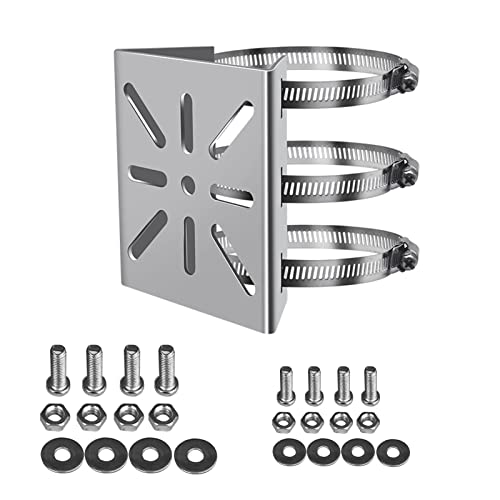
WiTi Universal Vertical Pole Mount for Security Camera, Stainless Steel
$12.99Stainless rather than painted steel, which is what a coastal or heavily salted location needs.
Check price on AmazonPrices change often.

ZT-NET Security Camera Corner Pole Mounting Bracket, Stainless Steel
$14.49A corner bracket that suits the smaller dome and turret bodies the larger mounts do not fit.
Check price on AmazonPrices change often.

Universal Bullet Security Camera Junction Box Mount Bracket, Rainproof
$15.99The connector is the part that fails outdoors, and a junction box is the cheapest way to keep it dry and out of sunlight.
Check price on AmazonPrices change often.

compcctv Security Camera Mount Bracket, Aluminum Indoor Outdoor Wall Mount L-Type
$19.99Aluminium rather than plastic, for a camera that has to stay aimed through a winter of wind loading.
Check price on AmazonPrices change often.
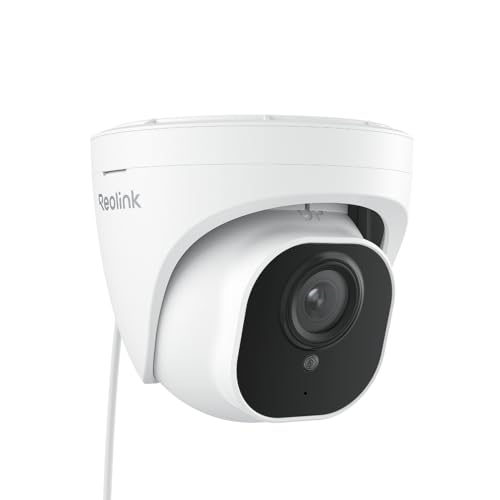
REOLINK RLC-820A 4K PoE Security Camera, Wired Outdoor Dome
$99.99The dome counterpart to the RLC-810A, same sensor and same detection, in a body that does not advertise which way it is looking.
- Resolution
- 8 MP
Prices change often.
Common questions
What is the ideal height for a doorbell camera versus a standalone camera?
A doorbell camera is mounted at door height by design, usually around 1.2 to 1.5 metres, which is far below the 2.5 to 3 metre convention for a standalone camera and is generally excellent for face capture at close range precisely because it sits low. It trades that low mount for being much easier to reach, which is why it is normally combined with tamper alerts rather than height alone.
Do vandalism-resistant mounting brackets change the ideal height?
They reduce the need to mount higher purely for tamper resistance, since a vandal-resistant housing and a secure corner or pole mount can protect a camera at the 2.5 to 3 metre convention height instead of forcing it up under the eaves. That keeps the face-capture angle intact while still addressing the reach concern that pushes many installers higher than necessary.
How does the mounting height calculator actually help?
It takes a planned mount height, the distance to the target, and the target's height, and returns the down-tilt angle needed to centre that target in frame, using the same geometry described in this guide. That turns "should I mount this at 2.5 or 3.5 metres" into an actual angle to compare before drilling any holes.
Does a wide-angle lens make the blind spot worse?
It can, because a wider lens generally has a larger vertical field of view, and the blind spot distance grows with a larger vertical field of view at a given tilt angle. The lens field of view calculator shows the actual vertical coverage for a specific lens, which is the number to check against the blind spot formula rather than assuming wider is always better.
Should a second-story camera use the same 2.5 to 3 metre convention?
The reach-based reasoning behind the convention weakens on a second story, since the camera is already out of easy reach from the ground. Height there is usually chosen for field of view and coverage instead, and the down-tilt and blind spot formulas still apply the same way, just starting from a taller mount.
Get the system planning sheet
The camera count, storage and PoE budget worksheet, plus the wiring checklist, as one printable page.
Keep going
Before you point a camera at anything. Aim cameras at your own property and your own boundary, never into a neighbour's windows or across their garden. Cameras in bedrooms, bathrooms, or anywhere else a person reasonably expects privacy are a serious legal problem, and that includes guests, lodgers and anyone who works in your home. Audio is legally different from video, many US states require the consent of every party to a recorded conversation, and several recorders capture audio by default, so check your own state before you enable it. Some places require visible notice that recording is taking place, and landlords and homeowner associations often impose their own rules on top. This is researched general information and not legal advice, and the law varies by state and by country.
And once it is installed. Change every default password, keep the firmware updated, and be clear with yourself about where the footage goes: a cloud camera means a third party holds recordings of your home, while a local recorder keeps them in your house. That is a genuine buying consideration, not a technicality.
A landlord or homeowners association may set its own rules on exterior mounting height and visibility, on top of the convention covered here, so check before mounting on a rented or shared building.