HOA and Landlord Camera Rules
An HOA or a landlord can impose camera rules that are stricter than general law, covering exterior mounting, visible hardware, and signage, even where the underlying recording itself would otherwise be perfectly legal. Check the governing documents or lease before installing anything visible from outside the unit.
General privacy law sets a floor for what recording is legally permitted. A homeowners association's covenants, or a landlord's own property rules, sit on top of that floor as a private, contractual layer, and they can be considerably stricter about exterior appearance, mounting method, and visible hardware than the underlying law requires. A camera that raises no legal issue at all can still violate an HOA's architectural guidelines.
This is a separate question from the privacy and audio topics covered elsewhere on this site. An HOA or landlord rule is not really about whether recording is allowed, it is about appearance, uniformity, and the physical modifications a homeowner or tenant is permitted to make to a shared or governed property.
| Question | Governed by |
|---|---|
| Can I legally record my own property? | General privacy law |
| What color, style, or mounting is allowed on the exterior? | HOA architectural guidelines |
| Can I drill into siding or run cable through a wall? | Lease alterations clause |
| Is my camera aimed at a private space, like a bedroom? | General privacy law, regardless of HOA or lease |
What kinds of rules does an HOA typically impose on cameras?
Architectural review requirements are the most common mechanism: many HOAs require exterior modifications, including visible camera hardware, to be submitted for approval before installation, covering things like housing color, mounting location, and whether wiring is visible from the street. This exists to preserve a uniform exterior appearance across the community, not primarily to regulate recording itself.
Can an HOA actually ban cameras outright?
This varies by association and by jurisdiction, and some places specifically protect a resident's right to install a security camera on their own property regardless of what an HOA's covenants say, while others give the HOA more latitude to regulate exterior appearance. Do not assume either answer applies to your specific HOA; read the current covenants or ask the board directly.
How does this interact with the underlying privacy rules?
An HOA-approved camera still has to follow the same general privacy rules as any other camera: it should be aimed at the homeowner's own property rather than into a neighbor's yard or windows, and it is still subject to whatever local signage requirements exist. HOA approval covers appearance and process, not the separate legal question of where the lens is pointed.
What do landlords typically add on top of a lease's alterations clause?
Beyond the general prohibition on drilling and permanent fixtures covered in the renters guide, some landlords add specific rules about camera placement, such as prohibiting cameras aimed at shared hallways, other units' doors, or common areas from a tenant's own device, since a landlord is often responsible for the privacy of every tenant in the building, not just the one installing the camera.
- Camera restrictions written into the lease itself
- Building-wide rules about cameras aimed at shared hallways or common doors
- Separate landlord-owned cameras in lobbies or shared entrances, disclosed to all tenants
What should you submit or ask about before installing?
Check the HOA's current architectural guidelines or the lease's specific language on cameras and exterior modifications before buying mounting hardware, since the answer determines whether a drilled bracket is fine or whether a non-destructive, less visible mount is the safer choice. If an HOA requires review, submit before installing rather than after, since removal and reinstallation after a rejected after-the-fact request is more work than a short approval process up front.
What is a reasonable default while you wait for an answer?
A discreet, non-destructive mount aimed strictly at your own entry points, with visible signage if required, is the version of a camera setup least likely to trigger either an HOA architectural objection or a landlord dispute, and it is a reasonable starting point while a formal approval process, if one is required, plays out.
What happens if a camera is installed without required approval?
An HOA that requires architectural review can typically issue a violation notice and, depending on its covenants, request removal or modification of hardware installed without approval, and repeated violations can sometimes carry fines under the association's enforcement rules. A landlord who discovers an unapproved drilled installation can raise it as a lease violation separate from whatever the camera itself recorded. Neither outcome is automatic, and both depend on the specific governing documents, but both are avoidable by checking first.
The gear that matches this answer

WiTi Universal Vertical Pole Mount for Security Camera, Metal Corner Bracket
$9.98Aiming a camera along a wall instead of perpendicular to it roughly doubles the useful coverage of a rectangular property.
Check price on AmazonPrices change often.
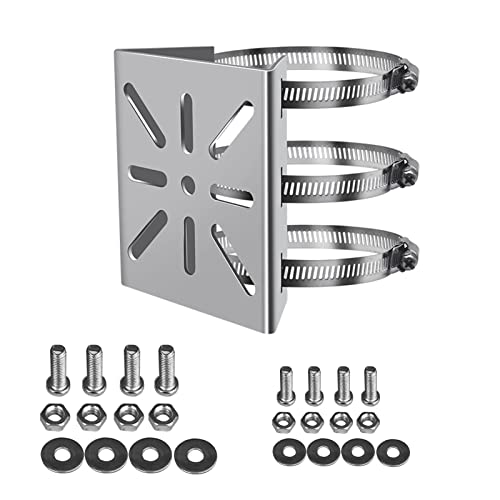
WiTi Universal Vertical Pole Mount for Security Camera, Stainless Steel
$12.99Stainless rather than painted steel, which is what a coastal or heavily salted location needs.
Check price on AmazonPrices change often.

Faittoo Video Surveillance Sign with 36 inch Stake, 12x12 inch
$22.99A staked sign at the property line, which is both the legal notice some places require and the warning that turns an opportunist away before anything happens.
Check price on AmazonPrices change often.
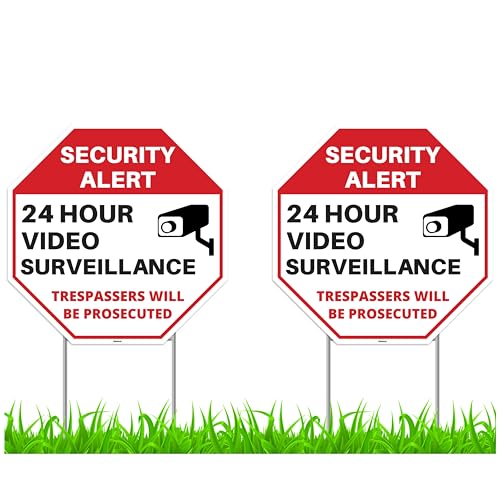
Venicor 24 Hour Video Surveillance Sign with Stakes, 12x12 inch, 2 Pack
$13.99Two signs, because a single sign at the front says nothing to anyone approaching from the rear.
Check price on AmazonPrices change often.
Common questions
Can my HOA legally stop me from installing any security camera?
It depends on the association and on where you live; some jurisdictions specifically protect a resident's right to install a security camera regardless of HOA covenants, while others give the association more room to regulate exterior appearance. Do not assume either outcome without checking your own HOA's current governing documents or asking the board directly.
Does HOA approval mean my camera placement is automatically legal?
No. HOA approval typically covers appearance, mounting method, and process, not the separate legal question of where the camera is aimed. A camera can be fully HOA-approved and still raise a privacy problem if it is angled toward a neighbor's yard or window, so both questions need to be checked independently.
What is an architectural review requirement?
It is a process some HOAs require before a homeowner makes a visible exterior change, including installing camera hardware, where the homeowner submits details like mounting location and housing color for board approval before installation. It exists mainly to keep a uniform exterior appearance across the community rather than to regulate recording itself.
Can a landlord restrict where a tenant's camera can point, beyond the lease's drilling rules?
Yes, many landlords add rules about camera placement on top of the general alterations clause, such as prohibiting a tenant's camera from being aimed at shared hallways or other tenants' doors, since the landlord is responsible for the privacy of every tenant in the building. Check the lease and any building-specific rules for this separately from the general drilling and fixtures restriction.
Should I install a camera before or after getting HOA approval?
After, if your HOA requires review for exterior modifications. Installing first and seeking approval afterward risks a rejected request that then has to be undone, which is more disruptive than a short approval process completed before any hardware goes up. Submit the request with mounting location and appearance details as early as you can.
Get the system planning sheet
The camera count, storage and PoE budget worksheet, plus the wiring checklist, as one printable page.
Keep going
Before you point a camera at anything. Aim cameras at your own property and your own boundary, never into a neighbour's windows or across their garden. Cameras in bedrooms, bathrooms, or anywhere else a person reasonably expects privacy are a serious legal problem, and that includes guests, lodgers and anyone who works in your home. Audio is legally different from video, many US states require the consent of every party to a recorded conversation, and several recorders capture audio by default, so check your own state before you enable it. Some places require visible notice that recording is taking place, and landlords and homeowner associations often impose their own rules on top. This is researched general information and not legal advice, and the law varies by state and by country.
And once it is installed. Change every default password, keep the firmware updated, and be clear with yourself about where the footage goes: a cloud camera means a third party holds recordings of your home, while a local recorder keeps them in your house. That is a genuine buying consideration, not a technicality.
This is researched general information about how HOA covenants and landlord rules commonly work, not legal advice, and specific rules vary by association, by lease, and by jurisdiction. Check your own governing documents before installing anything visible from outside the unit.