Cloud Camera Subscription Cost Over Five Years
At $6 a month per camera, an 8-camera cloud plan costs $2,880 over five years against $1,259.99 for a comparable local 16-channel PoE kit with an included hard drive currently listed in this catalog, more than double, and the subscription passes the hardware cost at around 26 months.
This comparison runs this site's cloud-versus-local arithmetic against real hardware prices pulled from the current catalog rather than invented figures. The monthly fee tiers ($3, $6 and $10 per camera) are illustrative examples spanning the range cloud plans commonly charge; use the calculator with your own provider's actual quoted price for an exact answer.
Local hardware costs below are current catalog prices at the time this page was built and will drift as listings change. A 2-camera system is priced as an 8-channel NVR plus two PoE cameras bought separately; the 4, 6 and 8 camera rows use complete kits that already include an NVR, cameras and a hard drive.
| Cameras | Local hardware (current catalog) | Cloud total at $3/mo per camera | Cloud total at $6/mo per camera | Cloud total at $10/mo per camera |
|---|---|---|---|---|
| 2 | $329.97 | $360 | $720 | $1,200 |
| 4 | $487.59 | $720 | $1,440 | $2,400 |
| 6 | $755.99 | $1,080 | $2,160 | $3,600 |
| 8 | $1,259.99 | $1,440 | $2,880 | $4,800 |
| Cameras | Local hardware | Break-even at $3/mo | Break-even at $6/mo | Break-even at $10/mo |
|---|---|---|---|---|
| 2 | $329.97 | 55 months | 27.5 months | 16.5 months |
| 4 | $487.59 | 40.6 months | 20.3 months | 12.2 months |
| 6 | $755.99 | 42 months | 21 months | 12.6 months |
| 8 | $1,259.99 | 52.5 months | 26.2 months | 15.7 months |
Where do the local hardware prices in this chart come from?
They are current listed prices for real products in this catalog: an 8-channel NVR plus two PoE bullet cameras for the 2-camera row, and complete PoE kits (NVR, cameras and a hard drive together) for the 4, 6 and 8 camera rows. These are not averaged industry figures; they will move as prices change, so treat the table as a snapshot and re-check current prices before buying.
What is left out of the local total?
Installation labor, extra cable, mounting hardware and an eventual hard drive replacement are not included in the hardware totals above. The underlying calculator has a separate input for drive replacement cost over the comparison period if you want to fold that in; it is left at zero here to keep the table focused on the up-front hardware gap.
Why does the cloud total keep climbing after break-even?
Local hardware is close to a one-off cost: buy it once, and the ongoing expense is mostly electricity and an occasional drive. A per-camera subscription is a recurring cost that never stops, so every additional year adds another full year of fees on top of a bill that has already passed the hardware cost. Over five years that gap compounds into a difference of thousands of dollars for a modest 6 to 8 camera system.
The gear that matches this answer

REOLINK 8CH 4K Security Camera System with 2TB HDD RLK8-800B6
$755.99Six 4K bullet cameras on an eight channel PoE recorder with a 2TB drive already fitted, which is the configuration most three bedroom homes land on after doing the entry point count.
- Channels
- 8
- Cameras included
- 6
- Resolution
- 8 MP
- Drive included
- 2 TB
Prices change often.
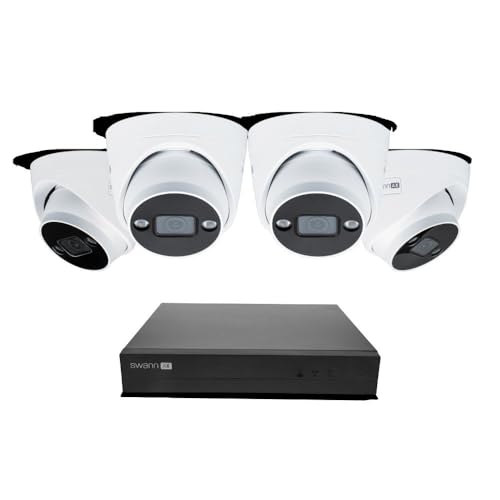
Swann AdvancedX Wired NVR 4K Security Camera System, 8 Channels, 4 PoE Dome Cameras
$487.59Four 4K domes and an eight channel recorder, and Swann publishes full local access so the system keeps working if the company ever stops running an app.
- Channels
- 8
- Cameras included
- 4
- Resolution
- 8 MP
- Storage
- Local NVR
Prices change often.
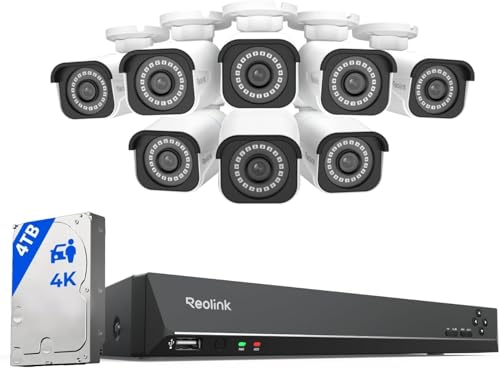
REOLINK 16CH 4K Security Bullet Camera System with 4TB HDD RLK16-800B8
$1,259.99Sixteen channels with eight 4K bullets and a 4TB drive, so there are eight spare channels for later without replacing the recorder.
- Channels
- 16
- Cameras included
- 8
- Resolution
- 8 MP
- Drive included
- 4 TB
Prices change often.

eufy Security SoloCam S340, 3K Dual-Lens Solar Security Camera
$159.99Solar charged with local storage on the camera, so it needs neither a cable nor a subscription, which is the only wireless configuration this site recommends without reservation.
- Power
- Solar and battery
- Storage
- On camera
Prices change often.

Ring Outdoor Cam, Stick Up Cam, Weather-Resistant HD Security Camera
$79.99Widely supported and simple to place, and the clearest example on this site of a camera where a third party holds the recordings of your home by default.
- Power
- Battery
Check first:Recording history requires a subscription, and footage is held by the vendor rather than by you.
Check price on AmazonPrices change often.
Common questions
What counts as break-even in this table?
Break-even is the point where the running total of cloud subscription fees equals the one-off local hardware cost. Before that point, cloud looks cheaper because you have not paid the hardware bill; after it, every additional month of subscription is money that would already have been recovered by owning the local system outright.
Are these exact prices I should expect to pay?
No. The hardware figures are current catalog prices at the time this table was built and will change; the monthly fee tiers are illustrative examples spanning a common range rather than a specific provider's plan. Use the calculator with your own quoted subscription price and current hardware price for a figure you can actually rely on.
Does a local system have any ongoing cost at all?
Some, but far less than a subscription. Electricity for the recorder and cameras is small and continuous, and a hard drive that is written to and overwritten around the clock for years will eventually need replacing. The calculator has a separate field for that replacement cost if you want to include it in your own comparison.
Why is the 2-camera hardware total built from separate parts instead of a kit?
Because the smallest complete camera kits in this catalog are built around four or more cameras. For two cameras, pairing a standalone 8-channel NVR with two individual PoE cameras is the realistic buying pattern, and it prices out lower than jumping to a 4-camera kit you do not need yet.
What if my cloud plan includes free storage for one camera?
Then your effective monthly cost per camera is lower than the per-camera rate on the label, and you should run the calculator with that blended rate rather than the sticker price. This table uses a flat per-camera fee for every camera to keep the comparison simple and it does not model free-tier allowances or bundled discounts.
Get the system planning sheet
The camera count, storage and PoE budget worksheet, plus the wiring checklist, as one printable page.
Keep going
Before you point a camera at anything. Aim cameras at your own property and your own boundary, never into a neighbour's windows or across their garden. Cameras in bedrooms, bathrooms, or anywhere else a person reasonably expects privacy are a serious legal problem, and that includes guests, lodgers and anyone who works in your home. Audio is legally different from video, many US states require the consent of every party to a recorded conversation, and several recorders capture audio by default, so check your own state before you enable it. Some places require visible notice that recording is taking place, and landlords and homeowner associations often impose their own rules on top. This is researched general information and not legal advice, and the law varies by state and by country.
And once it is installed. Change every default password, keep the firmware updated, and be clear with yourself about where the footage goes: a cloud camera means a third party holds recordings of your home, while a local recorder keeps them in your house. That is a genuine buying consideration, not a technicality.