REOLINK RLC-823S1 PTZ Review
The REOLINK RLC-823S1 is a $246.49 4K PTZ camera with published 5x optical zoom and 360 degree pan. Optical zoom multiplies the effective focal length, and therefore every DORI distance, by up to the stated 5x factor at full telephoto compared to its widest setting, though REOLINK does not publish the wide-end focal length needed to compute an absolute distance for this specific camera.
Optical zoom is the one camera feature in this catalog that genuinely changes the distance math, because it changes the focal length in the DORI formula rather than just adding sensor pixels that a fixed lens cannot resolve at range. The RLC-823S1 publishes a 5x optical zoom figure, 360 degree pan and 90 degree tilt, on an 8MP sensor.
This review works from those published figures and explains what the zoom multiplier means mathematically, while being explicit about the one number this listing does not provide: a base focal length at the widest zoom setting, without which an absolute DORI distance in meters cannot be honestly computed for this exact camera.
| Spec | Value |
|---|---|
| Resolution | 8MP (3840x2160) |
| Optical zoom | 5x (published) |
| Pan range | 360 degrees |
| Tilt range | 90 degrees |
| Stated IR range | Up to 60 m / about 197 ft (manufacturer figure) |
| PoE class | Not published |
| Price | $246.49 |
Why optical zoom is different from a wider sensor
In the DORI formula, distance scales directly with tan(hfov/2), and tan(hfov/2) is sensor width divided by twice the focal length. Increasing the focal length, which is exactly what optical zoom does, shrinks tan(hfov/2) and pushes every DORI distance out proportionally. A 5x optical zoom multiplies the effective focal length by up to 5 at full telephoto, which multiplies every DORI distance, detect, observe, recognise and identify, by close to the same 5x factor relative to the widest setting.
Digital zoom does none of this. It crops and enlarges pixels that were already captured at the wide setting, so it never adds resolution at range the way a longer physical focal length does. The distinction matters most on a long driveway, where a fixed wide lens can show that a vehicle is present but never resolve a plate, no matter how much the recorded footage is digitally zoomed afterward.
What is missing to compute an absolute distance
The DORI formula needs a specific focal length in millimeters, and this listing states a zoom ratio rather than the base focal length at the widest end. That means the 5x multiplier is verifiable and real, but an absolute number like "identifies to 40 meters" cannot be honestly stated here without inventing a starting focal length this listing does not provide.
Anyone who owns this camera can get the real number by pulling the wide and telephoto focal lengths from the printed manufacturer datasheet and running both through the DORI distance calculator. Anyone comparing this camera to a fixed-lens model before buying should compare the published zoom ratio against a fixed camera published focal length only in relative terms, not by assuming a specific starting point.
Night vision and power draw, what is published and what is not
REOLINK states that infrared night vision on this camera reveals detail from a distance of up to 60 meters (about 197 feet), and that the camera also offers a full color night vision mode. That is the manufacturer own figure for this camera, and it should be read the same way any stated IR distance is read: a best-case measurement, not a guaranteed working range.
This listing does not publish a PoE power class for this camera. A motorized pan-tilt-zoom mechanism typically draws more current than a fixed bullet or dome camera of the same resolution, so budgeting this camera on a shared PoE switch on the assumption it only needs the base 802.3af 15.4 watt class 3 allocation is a real risk. Confirm the actual class from the manufacturer datasheet and run it through the PoE power budget calculator before finalizing a switch.
Is this a hands-on review
No. This is not a hands-on review. This camera has not been mounted or run through a pan-tilt-zoom cycle by anyone on this team, and no distance or power figure above comes from a measured result. Everything here is either the published listing figure or the geometric implication of the published zoom ratio.
Who should not buy this
A fixed entry point that never needs to look in more than one direction gains little from pan and zoom and pays a real premium for both; a fixed bullet or dome camera at the same 8MP resolution covers that case for less money.
Anyone budgeting a PoE switch to the tightest possible margin should be cautious here, since the actual power class is not published and a motorized head is unlikely to sit at the lowest class available.
Anyone who wants a firm, stated identify distance in meters or feet before buying will not find one for this camera without pulling the base focal length from the manufacturer datasheet themselves.
The gear that matches this answer

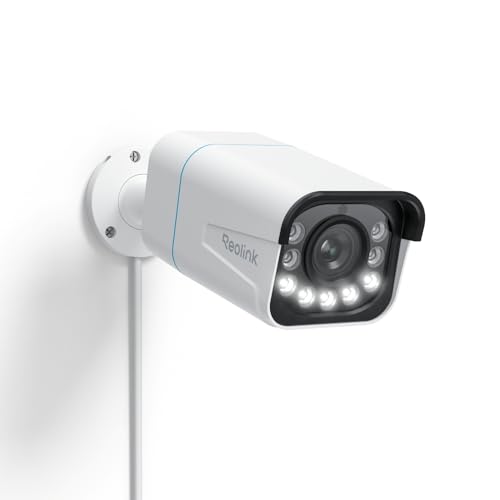
REOLINK RLC-823S1 4K PoE PTZ Camera, 5X Optical Zoom
$246.49Five times optical zoom multiplies pixels per metre at the far end of a drive by five, which no amount of sensor resolution on a fixed wide lens will do.
- Resolution
- 8 MP
- Optical zoom
- 5 x
Prices change often.
REOLINK RLC-811A PoE Security Camera, 5X Optical Zoom, 4K
$139.99The same five times optical zoom in a fixed bullet body rather than a motorised head, which is cheaper and has nothing in it that can seize.
- Resolution
- 8 MP
- Optical zoom
- 5 x
Prices change often.

REOLINK TrackMix PoE Dual-Lens PTZ Security Camera, 6X Hybrid Zoom
$199.99Two lenses at once, one wide for context and one telephoto for detail, which resolves the usual argument between covering the whole drive and identifying anyone on it.
- Resolution
- 8 MP
Prices change often.

REOLINK E1 Outdoor SE PoE 4K Camera with Pan and Tilt
$119.99Pan and tilt on a small PoE body, useful where one camera has to cover two directions that are not adjacent.
- Resolution
- 8 MP
Prices change often.
Common questions
Does 5x optical zoom actually improve identify distance?
Yes, and by a real, computable amount. Optical zoom lengthens the physical focal length, which is the same variable that lengthens every DORI distance in the standard formula. A 5x optical zoom multiplies the effective focal length, and every DORI distance with it, by up to 5 times relative to the widest setting, unlike digital zoom which adds no new resolution at range.
What is the actual identify distance in meters for this camera?
REOLINK does not publish the base focal length at the widest zoom setting for this camera, and that figure is required to compute an absolute DORI distance. The 5x multiplier relative to the wide setting is real and computable; a specific number in meters is not, without pulling the datasheet focal length yourself.
What night vision range does REOLINK publish?
REOLINK states this camera reveals clear detail via infrared out to about 60 meters (197 feet), alongside a separate full color night vision mode. That is the manufacturer own figure, measured under ideal conditions, and should be treated as a best case rather than a guaranteed working distance.
How much PoE power does this camera need?
This listing does not publish a PoE power class for the camera. Pan-tilt-zoom mechanisms generally draw more than fixed cameras, so it should not be assumed to fit within the base 15.4 watt 802.3af class 3 allocation without confirming the actual figure from the manufacturer datasheet.
Is optical zoom better than buying a higher resolution fixed camera?
For distance, yes. Optical zoom changes the focal length in the DORI formula directly, while a higher resolution fixed lens only adds pixels across the same field of view. A 12MP fixed camera and an 8MP camera with 5x optical zoom will resolve range very differently, and the zoom camera generally wins at genuine distance.
Get the system planning sheet
The camera count, storage and PoE budget worksheet, plus the wiring checklist, as one printable page.
Keep going
Before you point a camera at anything. Aim cameras at your own property and your own boundary, never into a neighbour's windows or across their garden. Cameras in bedrooms, bathrooms, or anywhere else a person reasonably expects privacy are a serious legal problem, and that includes guests, lodgers and anyone who works in your home. Audio is legally different from video, many US states require the consent of every party to a recorded conversation, and several recorders capture audio by default, so check your own state before you enable it. Some places require visible notice that recording is taking place, and landlords and homeowner associations often impose their own rules on top. This is researched general information and not legal advice, and the law varies by state and by country.
And once it is installed. Change every default password, keep the firmware updated, and be clear with yourself about where the footage goes: a cloud camera means a third party holds recordings of your home, while a local recorder keeps them in your house. That is a genuine buying consideration, not a technicality.