4K vs 1080p Security Cameras
A 4K sensor (3840x2160) has exactly twice the horizontal pixels of 1080p (1920x1080), and because DORI distance scales directly with horizontal resolution, a 4K camera reaches the same recognise or identify threshold at twice the distance a 1080p camera does from the identical lens and mounting point.
Marketing calls 4K "four times the resolution" of 1080p, and that is true only as a count of total pixels: 3840x2160 is 8.3 megapixels against 1920x1080's 2.1 megapixels, which is roughly four times the area. What actually determines how far a camera can identify a face or a license plate is the horizontal pixel count, because EN 62676-4's DORI standard measures pixels per metre of scene width, and 4K's 3840 horizontal pixels against 1080p's 1920 is exactly a factor of two, not four.
That factor of two in distance is the entire practical argument for 4K on a security camera. A 1080p camera that clearly identifies a face at 10 metres will only recognise, not identify, that same face at 20 metres, while a 4K camera with the identical lens still identifies it at 20 metres. Coverage area, not just pixel count, is what a homeowner is actually buying.
| Resolution | Horizontal pixels | Identify distance vs 1080p |
|---|---|---|
| 1080p / 2MP | 1920 | 1.0x (baseline) |
| 5MP | 2592 | about 1.35x |
| 4K / 8MP | 3840 | 2.0x |
| 12MP | 4512 | about 2.35x |
| Level | Pixels per metre of scene | What it means |
|---|---|---|
| Detect | 25 | Something is there, and it is a person rather than a shadow |
| Observe | 62.5 | Clothing and behaviour are visible |
| Recognise | 125 | You can tell whether it is someone you know |
| Identify | 250 | A stranger can be identified to an evidential standard |
What does DORI actually measure?
EN 62676-4 defines four pixel density thresholds, measured as pixels per metre of scene width at a given distance: 25 ppm to Detect that something is there, 62.5 ppm to Observe what it is doing, 125 ppm to Recognise someone you already know, and 250 ppm to Identify a stranger to an evidential standard. These thresholds do not move; they are the definition, not a marketing claim.
Because pixels per metre is calculated as horizontal sensor pixels divided by the scene width the lens covers at that distance, doubling the horizontal pixel count while holding the lens and distance constant exactly doubles the pixel density. Equivalently, to hold pixel density constant while doubling the sensor's horizontal pixels, the distance can double too, which is the source of the "twice the distance" claim.
Why isn't 4K simply "four times better"?
Because DORI distance is a horizontal measurement, and horizontal resolution only doubled between 1080p and 4K even though total pixel count quadrupled. The extra vertical resolution in 4K improves the picture but does not extend how far away a face is identifiable, since identification distance is governed by the horizontal axis in the standard's own formula.
Does this apply to 5MP and 12MP cameras too?
Yes, using the same logic with different ratios. A 5MP sensor at 2592x1944 has 1.35 times the horizontal pixels of 1080p, so it reaches a given DORI level at 1.35 times the distance. A 12MP sensor at 4512x2512 has 2.35 times the horizontal pixels of 1080p, extending identify distance further still, which is exactly why the highest resolution cameras in this catalog are recommended for the one camera on a property that has to identify rather than merely detect, such as a long driveway approach.
- 1080p (1920px): the baseline distance
- 5MP (2592px): about 1.35x the baseline distance
- 4K / 8MP (3840px): exactly 2x the baseline distance
- 12MP (4512px): about 2.35x the baseline distance
Does 4K cost meaningfully more to run?
On storage, yes, by convention rather than by any published standard: a typical 4K camera runs around 6 Mbps in H.265 against roughly 2 Mbps for 1080p, which is triple the data. At 1 Mbps working out to 450 MB an hour, that difference adds up across a multi camera system and is the main reason to size an NVR's drive around the resolution actually chosen, not a generic guess.
Is 1080p ever the right choice anyway?
Yes, for a camera whose job is only to detect motion at close range, such as a doorbell camera pointed at a porch three metres away, or a wide interior view. At close range, even 1080p comfortably clears the identify threshold, so the extra pixels of 4K are only wasted cost. The distance where a comparison matters is the one where 1080p starts falling into recognise or observe territory and 4K is still identifying.
The verdict
Choose 4K for any camera watching a driveway, a street facing yard, or any distance beyond a few metres, since it doubles the range at which a face or plate can actually be identified rather than just noticed. Stick with 1080p only for close range positions like a doorbell or an indoor hallway, where the distance is short enough that even the lower resolution clears the identification threshold.
The gear that matches this answer

REOLINK RLC-810A PoE Security Camera, 4K Wired Outdoor
$84.99The default 4K PoE bullet in this catalog: person and vehicle detection on the camera itself, so alerts are not triggered by every passing shadow.
- Resolution
- 8 MP
- Lens
- 4 mm
- Storage
- PoE, needs an NVR or NAS
Prices change often.

Amcrest UltraHD 4K 8MP Outdoor Bullet Security IP PoE Camera, 98ft NightVision
$94.95Amcrest publishes its IR range and its lens focal length in the listing, which is rarer than it should be and is what makes a coverage calculation possible before you buy.
- Resolution
- 8 MP
- Stated IR range
- 98 ft
- Lens
- 2.8 mm
Prices change often.

REOLINK 8CH 4K Security Camera System with 2TB HDD RLK8-800B6
$755.99Six 4K bullet cameras on an eight channel PoE recorder with a 2TB drive already fitted, which is the configuration most three bedroom homes land on after doing the entry point count.
- Channels
- 8
- Cameras included
- 6
- Resolution
- 8 MP
- Drive included
- 2 TB
Prices change often.

Blink Outdoor 4 Wireless Smart Security Camera, 1080p
$129.99The cheapest name brand wireless camera, and an honest demonstration of the trade: 1080p puts roughly a third of the pixels on the scene that a 4K PoE camera does.
- Resolution
- 2 MP
- Power
- Battery
Check first:Full functionality expects a subscription, and 1080p will not reach DORI identify distance at any useful range.
Check price on AmazonPrices change often.
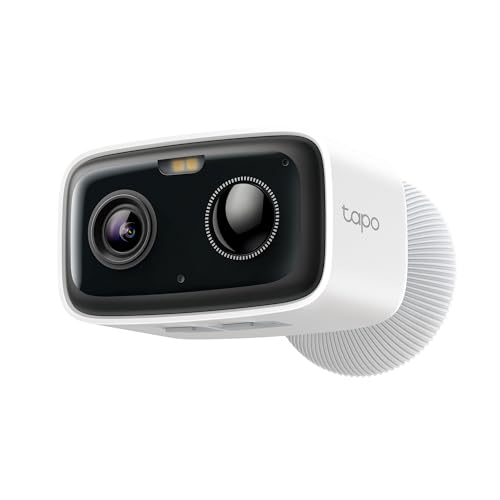
Tapo 1080p Outdoor Wireless Security Camera, Up to 180-Day Battery, C400
$44.99A very long battery life and local microSD storage, so it can run without a subscription.
- Resolution
- 2 MP
- Power
- Battery
- Storage
- microSD
Prices change often.
Common questions
Is 4K really only twice as good as 1080p, not four times?
For identification distance, yes, exactly twice. Total pixel count is four times higher because both the horizontal and vertical dimensions doubled, but DORI distance under EN 62676-4 is calculated from horizontal pixels alone, and 3840 horizontal pixels against 1920 is a factor of two, which is what actually determines how far away a face can be identified.
Does a wider lens reduce the benefit of 4K?
Yes. A wider field of view spreads the same pixel count across more scene width, which lowers pixels per metre at any given distance and shortens the DORI distance. A 4K camera on a very wide lens can end up with a shorter identify distance than a 1080p camera on a narrower lens, so the lens and the sensor have to be considered together, not the sensor alone.
Do I need 4K for a doorbell camera?
Usually not. A doorbell watches a porch a few metres away, a distance where even 1080p comfortably clears the identify threshold for a typical lens. The 2K and 4K doorbell options in this catalog are worth the extra cost mainly when the porch is unusually deep or when the camera also needs to read a package label at a distance.
Why do some 4K cameras still look soft at night?
Resolution measures daylight detail, not low light performance, which depends on sensor size, aperture and infrared range instead. A 4K sensor with a small aperture and weak IR LEDs can look softer at night than a 5MP camera with a wider aperture and stronger infrared, so night vision specs deserve their own separate check.
Does 12MP make sense for a typical home?
Only for the one camera on the property where identification at real distance is the actual requirement, such as a long driveway or a gate far from the house. For the rest of a typical exterior, 4K already reaches identify distance well past where most residential lots end, so 12MP is spending money on range most homes do not need.
Get the system planning sheet
The camera count, storage and PoE budget worksheet, plus the wiring checklist, as one printable page.
Keep going
Before you point a camera at anything. Aim cameras at your own property and your own boundary, never into a neighbour's windows or across their garden. Cameras in bedrooms, bathrooms, or anywhere else a person reasonably expects privacy are a serious legal problem, and that includes guests, lodgers and anyone who works in your home. Audio is legally different from video, many US states require the consent of every party to a recorded conversation, and several recorders capture audio by default, so check your own state before you enable it. Some places require visible notice that recording is taking place, and landlords and homeowner associations often impose their own rules on top. This is researched general information and not legal advice, and the law varies by state and by country.
And once it is installed. Change every default password, keep the firmware updated, and be clear with yourself about where the footage goes: a cloud camera means a third party holds recordings of your home, while a local recorder keeps them in your house. That is a genuine buying consideration, not a technicality.