Weatherproofing Outdoor Cameras
IP66 means dust tight and protected against powerful water jets from any direction; IP67 adds protection against temporary immersion. In practice, the connector rather than the camera body is what actually fails outdoors, and a junction box that keeps the RJ45 dry and out of direct sunlight prevents most weatherproofing failures.
Manufacturers advertise an IP rating on the camera body and most outdoor camera failures still happen at the connector, not inside the housing the rating describes. Understanding what an IP rating actually promises, and where the real point of failure sits, prevents most of the weatherproofing problems that show up as a slow, mysterious dropout months after installation.
None of the specific figures below are a guarantee for any particular camera model. Check the exact rating printed on a product's own listing before relying on it.
| Rating | Dust protection | Water protection | Typical use |
|---|---|---|---|
| IP65 | Dust protected | Low pressure water jets from any direction | Covered outdoor areas, entry-level cameras |
| IP66 | Dust tight | Powerful water jets from any direction | Standard fully exposed outdoor camera |
| IP67 | Dust tight | Temporary immersion to a limited depth | Heavy rain exposure and washdown-adjacent areas |
What an IP rating actually promises
The IP, or Ingress Protection, rating is a published international standard describing two things: resistance to solid particles like dust, given as the first digit, and resistance to water, given as the second. IP66 means dust tight (no ingress of dust at all) and protected against powerful water jets from any direction. IP67 adds protection against temporary immersion, typically to a modest depth for a limited time, on top of being dust tight.
The rating describes the sealed housing as tested by the manufacturer under controlled conditions. It says nothing about a connector left hanging outside that housing, a cable jacket exposed to years of sun, or a mounting bracket that lets water pool against a gasket it was never designed to sit in permanently.
The connector, not the camera body, is what actually fails
An outdoor camera's housing is built and rated for weather. The RJ45 connector at the end of its Ethernet cable, or the barrel connector on a wired power camera, very often is not, and it is frequently the exact point where an installer stops paying attention once the camera itself is mounted and working. Water works into an unprotected connector gradually, corrodes the contacts, and produces an intermittent connection that looks like a failing camera for months before anyone traces it back to the connector.
A weatherproof junction box at every outdoor connection point keeps the RJ45 or barrel connector dry and out of direct sunlight, and it is one of the least expensive parts of an outdoor camera install relative to how much failure it prevents.
UV resistant cable matters as much as the connector
Standard indoor rated cable jacket is not formulated to survive continuous ultraviolet exposure. Over a year or two outdoors, an unrated jacket can crack and stiffen, which both threatens the physical integrity of the cable and lets moisture reach the conductors at any nick or flaw in the jacket. Outdoor runs need cable that is specifically UV resistant or direct burial rated, not indoor cable routed outside because it happened to be on hand.
Where water actually gets in
Beyond the connector itself, three details account for most weatherproofing failures: a cable entry point into a housing without a proper gland or grommet, a mounting surface that lets water pool against the camera's base instead of running off, and a missing drip loop that lets water run down the cable and directly into a connector instead of dripping off a low point first.
- Form a drip loop in the cable below the connector so water drips off before it reaches the connection
- Seal the cable entry point into any junction box or housing with the gland or grommet it shipped with
- Mount so water runs off the housing rather than pooling against a seam or gasket
Mounting and housings suited to weather exposure
A stable mount matters for more than aiming the camera correctly. A mount that flexes in wind works water into seals over time through repeated small movements, and a pole or wall mount rated for outdoor exposure resists corrosion at the mounting hardware itself in a way a generic indoor bracket does not.
Checking a listing before buying, not assuming
Never assume a camera carries a specific IP rating, operating temperature range or any other weather related figure that its own product listing does not state. Manufacturers publish these figures when the rating is meaningful to the model, and a camera without a stated IP rating should be treated as unrated for outdoor use rather than assumed to meet a common figure like IP66 by default.
The gear that matches this answer

Universal Bullet Security Camera Junction Box Mount Bracket, Rainproof
$15.99The connector is the part that fails outdoors, and a junction box is the cheapest way to keep it dry and out of sunlight.
Check price on AmazonPrices change often.
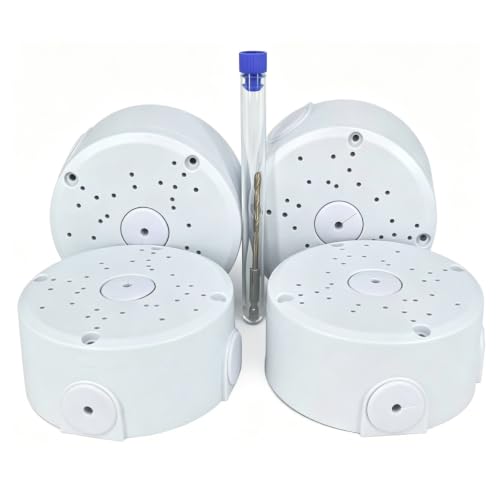
ABS Universal Junction Box for IP Camera Mount Bracket, 4 Pack
$9.99Four boxes for the price of one branded unit, which is the sensible buy when every camera on the house needs one.
Check price on AmazonPrices change often.

Hrensaw Large Outdoor Electrical Box, Weatherproof, IP54
$24.99Somewhere dry for a PoE injector or an extender that has to live outdoors partway along a long run.
Check price on AmazonPrices change often.
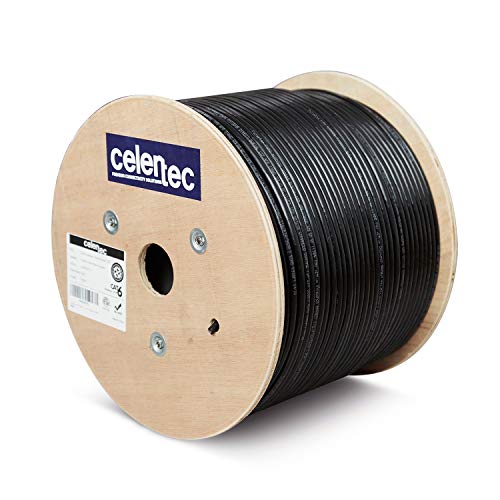
celertec CAT6 Outdoor Cable, 1000ft, 23AWG Solid Bare Copper, Unshielded
$219.99Solid bare copper at 23AWG for noticeably less than the TRUE CABLE equivalent, for outdoor runs that are not being buried.
- Cable category
- Cat6
- Conductor gauge
- 23 AWG
- Conductor
- Solid bare copper
- Length
- 1000 ft
Prices change often.
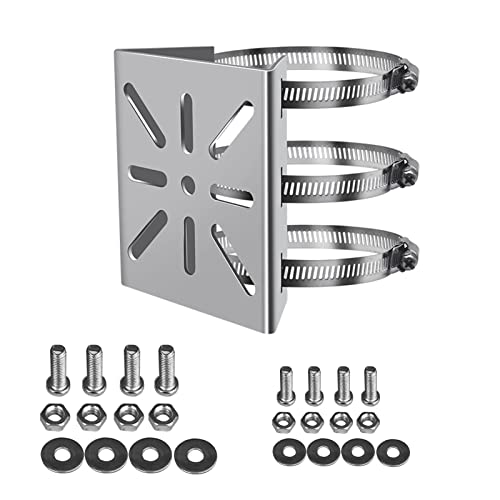
WiTi Universal Vertical Pole Mount for Security Camera, Stainless Steel
$12.99Stainless rather than painted steel, which is what a coastal or heavily salted location needs.
Check price on AmazonPrices change often.
Common questions
Does an IP66 rated camera need a junction box at all?
Yes, in most cases. The IP66 rating covers the camera's own sealed housing, not the RJ45 or barrel connector at the end of its cable. That connector is usually not rated to the same standard, and a junction box keeps it dry and out of direct sun, which prevents the slow corrosion that causes many outdoor camera failures.
Can I use regular indoor Ethernet cable for a short outdoor run?
It is not a good idea even for a short run. Standard cable jackets are not formulated for continuous ultraviolet exposure and will crack and stiffen over time outdoors, which lets moisture reach the conductors. Use cable rated UV resistant or direct burial for any run that spends its life outside.
What is the difference between IP66 and IP67 in practice?
Both describe dust tight housings. IP66 adds protection against powerful water jets from any direction, which covers driving rain and hose spray. IP67 adds protection against temporary immersion to a limited depth, which matters more for a camera mounted low where standing water could reach it than for one mounted well above grade.
My outdoor camera's spec sheet does not list an IP rating. Is that unusual?
It happens, and it should be treated as a real gap rather than assumed to mean a common rating like IP66 by default. Check the exact product listing before installing the camera in a fully exposed location, and consider added protection such as an overhang or a rated enclosure if no rating is published.
Do I need a drip loop even with a good junction box?
Yes. A drip loop, a low point formed in the cable below the connector, lets water run off and drip away before it reaches the connection point, and it works alongside a junction box rather than replacing the need for one. Skipping it lets water track straight down the cable into the box's entry point.
Get the system planning sheet
The camera count, storage and PoE budget worksheet, plus the wiring checklist, as one printable page.
Keep going
Before you point a camera at anything. Aim cameras at your own property and your own boundary, never into a neighbour's windows or across their garden. Cameras in bedrooms, bathrooms, or anywhere else a person reasonably expects privacy are a serious legal problem, and that includes guests, lodgers and anyone who works in your home. Audio is legally different from video, many US states require the consent of every party to a recorded conversation, and several recorders capture audio by default, so check your own state before you enable it. Some places require visible notice that recording is taking place, and landlords and homeowner associations often impose their own rules on top. This is researched general information and not legal advice, and the law varies by state and by country.
And once it is installed. Change every default password, keep the firmware updated, and be clear with yourself about where the footage goes: a cloud camera means a third party holds recordings of your home, while a local recorder keeps them in your house. That is a genuine buying consideration, not a technicality.
Check the exact IP rating on a camera's own listing before buying for a fully exposed location, and box the connector regardless of what that rating says.