IP Weather Rating Chart for Outdoor Cameras
An IP66 rating means an enclosure is completely dust tight and can withstand powerful water jets from any direction, which is the published IEC 60529 standard most outdoor camera housings are built to meet; it is stronger than IP65's low-pressure jet rating but short of IP67's temporary-immersion test.
IP stands for Ingress Protection, and the two digits that follow it are defined by IEC 60529, an international standard, not a marketing term a manufacturer can define for itself. The first digit rates protection against solid objects and dust; the second rates protection against liquids. Each digit is independent of the other, so a camera can be rated highly for dust and only moderately for water, or the reverse.
This chart explains what each digit means in general, from the published standard. It does not state what any specific product in this catalog is rated, since only the manufacturer's own published specification for that exact model is a valid source for that number; check the individual listing before buying.
| Digit | Protects against | What it means in practice |
|---|---|---|
| 0 | No protection | No protection against contact or foreign objects of any size. |
| 1 | Objects larger than 50mm | Blocks accidental contact by a hand; does not block dust or small debris. |
| 2 | Objects larger than 12.5mm | Blocks fingers; does not stop dust ingress. |
| 3 | Objects larger than 2.5mm | Blocks tools and thick wires; still not dust protected. |
| 4 | Objects larger than 1mm | Blocks thin wires and most insects; still not dust protected. |
| 5 | Dust protected | Limited dust may enter but not enough to interfere with operation. |
| 6 | Dust tight | No dust ingress at all under test conditions. |
| Digit | Protects against | What it means in practice |
|---|---|---|
| 0 | No protection | No protection against any moisture. |
| 1 | Dripping water | Vertically falling drops only, such as condensation. |
| 2 | Dripping water, tilted | Drops falling at up to 15 degrees from vertical. |
| 3 | Spraying water | Water sprayed at up to 60 degrees from vertical, such as light rain at an angle. |
| 4 | Splashing water | Water splashed from any direction, such as wind-blown rain. |
| 5 | Water jets | Low-pressure jets from any direction, such as a garden hose. |
| 6 | Powerful water jets | Higher-pressure jets from any direction without harmful ingress. |
| 7 | Temporary immersion | Immersion between 15cm and 1m depth for up to 30 minutes. |
| 8 | Continuous immersion | Immersion beyond 1m depth, to a depth the manufacturer specifies. |
| 9 | High-pressure, high-temperature jets | Close-range hot, high-pressure wash-down, an automotive and industrial test more than a home camera need. |
| Code | Meaning | Outdoor camera suitability |
|---|---|---|
| IP54 | Dust protected, splashing water protected | Suits a sheltered spot such as under an eave; not built for direct, driving rain. |
| IP65 | Dust tight, low-pressure jets protected | A common baseline for outdoor cameras exposed to open weather. |
| IP66 | Dust tight, powerful jets protected | A stronger, widely used rating for cameras facing driving rain and wind. |
| IP67 | Dust tight, temporary immersion protected | Exceeds ordinary rain exposure; useful where flooding at the mount point is possible. |
| IP68 | Dust tight, continuous immersion protected | Well beyond what an above-ground outdoor camera normally needs. |
How do you read an IP code?
Read the two digits separately: the first is solids and dust, the second is liquids, and neither implies anything about the other. A code of IPX6, with an X in place of the first digit, means the solids rating was not assessed or not disclosed for that claim, while the liquid protection (powerful jets) is still a real, published figure for that specific rating.
Which rating does an outdoor security camera actually need?
For a camera mounted outdoors and exposed to wind, rain and dust, a dust-tight first digit (5 or 6) paired with a jet-rated second digit (5 or 6) is the practical target; that is what IP65 and IP66 represent. Immersion ratings (7 and 8) matter far more for a camera near a pool, a fountain, or a spot prone to standing water than for one mounted on a wall or under an eave.
Is a higher IP number always better?
Not automatically, since the two digits measure different things and a camera can be over-specified for one axis while genuinely needing the other. A camera rated IP68 for immersion but never near standing water is not gaining anything useful from that number over an IP66 camera, and the real question is always whether the specific published rating covers the specific exposure the camera will actually face.
The gear that matches this answer

Amcrest UltraHD 4K 8MP Outdoor Bullet Security IP PoE Camera, 98ft NightVision
$94.95Amcrest publishes its IR range and its lens focal length in the listing, which is rarer than it should be and is what makes a coverage calculation possible before you buy.
- Resolution
- 8 MP
- Stated IR range
- 98 ft
- Lens
- 2.8 mm
Prices change often.

Amcrest UltraHD 4K 8MP Outdoor Security IP Turret PoE Camera, 98ft NightVision
$88.99A turret aims like a bullet but sits in a dome housing, so it avoids the infrared bounce a true dome can get off its own cover glass.
- Resolution
- 8 MP
- Stated IR range
- 98 ft
Prices change often.

REOLINK RLC-810A PoE Security Camera, 4K Wired Outdoor
$84.99The default 4K PoE bullet in this catalog: person and vehicle detection on the camera itself, so alerts are not triggered by every passing shadow.
- Resolution
- 8 MP
- Lens
- 4 mm
- Storage
- PoE, needs an NVR or NAS
Prices change often.
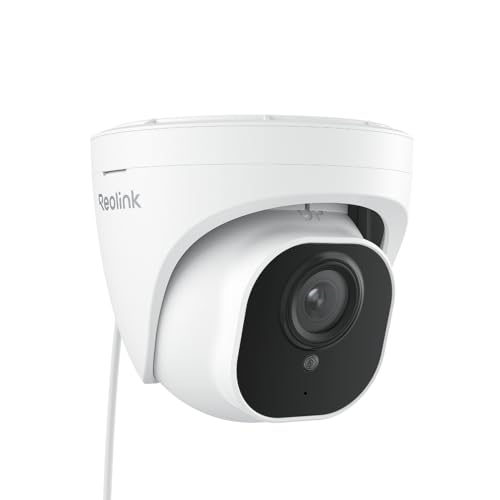
REOLINK RLC-820A 4K PoE Security Camera, Wired Outdoor Dome
$99.99The dome counterpart to the RLC-810A, same sensor and same detection, in a body that does not advertise which way it is looking.
- Resolution
- 8 MP
Prices change often.

VALUCAM PFA130-E Security Camera Wall and Ceiling Mounting Junction Box, IP66
$17.99An IP66 rating is a published ingress standard rather than a marketing word, and this is the pattern most Dahua and Amcrest bodies are designed to sit on.
Check price on AmazonPrices change often.
Common questions
What does the X mean in a rating like IPX5?
An X in either position means that axis was not assessed or not disclosed for that specific rating, not that it failed or scored zero. IPX5 states only the liquid protection (low-pressure jets); the solids and dust protection for that same unit is simply not part of that particular published claim, and a reader should not assume a number for it.
Is IP65 enough for a camera exposed to rain?
For most wind-blown rain and general outdoor exposure, IP65 is a reasonable baseline, since it covers dust tightness and low-pressure water jets from any direction. A location with heavier, more direct water exposure or a risk of standing water at the mount point is better matched to IP66 or higher.
Does an IP rating cover temperature or cold weather performance?
No. IP codes are exclusively about solid object and liquid ingress, not temperature. A camera's cold or heat tolerance is a separate published operating temperature range specification, and a high IP rating says nothing about how the electronics behave in extreme heat or cold.
Where can I find a specific camera's actual IP rating?
On that exact model's own published specification sheet or product listing, which is the only reliable source. This chart explains what the digits mean in general from the published IEC 60529 standard; it is not a substitute for checking the rating the manufacturer states for the specific camera you are considering.
What is the practical difference between IP66 and IP67?
Both require the enclosure to be completely dust tight. IP66 additionally requires surviving powerful water jets from any direction, while IP67 instead requires surviving temporary immersion between 15cm and 1m of water for up to 30 minutes. IP67 is not simply "better" than IP66; it is a different liquid test that happens to be numbered higher.
Get the system planning sheet
The camera count, storage and PoE budget worksheet, plus the wiring checklist, as one printable page.
Keep going
Before you point a camera at anything. Aim cameras at your own property and your own boundary, never into a neighbour's windows or across their garden. Cameras in bedrooms, bathrooms, or anywhere else a person reasonably expects privacy are a serious legal problem, and that includes guests, lodgers and anyone who works in your home. Audio is legally different from video, many US states require the consent of every party to a recorded conversation, and several recorders capture audio by default, so check your own state before you enable it. Some places require visible notice that recording is taking place, and landlords and homeowner associations often impose their own rules on top. This is researched general information and not legal advice, and the law varies by state and by country.
And once it is installed. Change every default password, keep the firmware updated, and be clear with yourself about where the footage goes: a cloud camera means a third party holds recordings of your home, while a local recorder keeps them in your house. That is a genuine buying consideration, not a technicality.